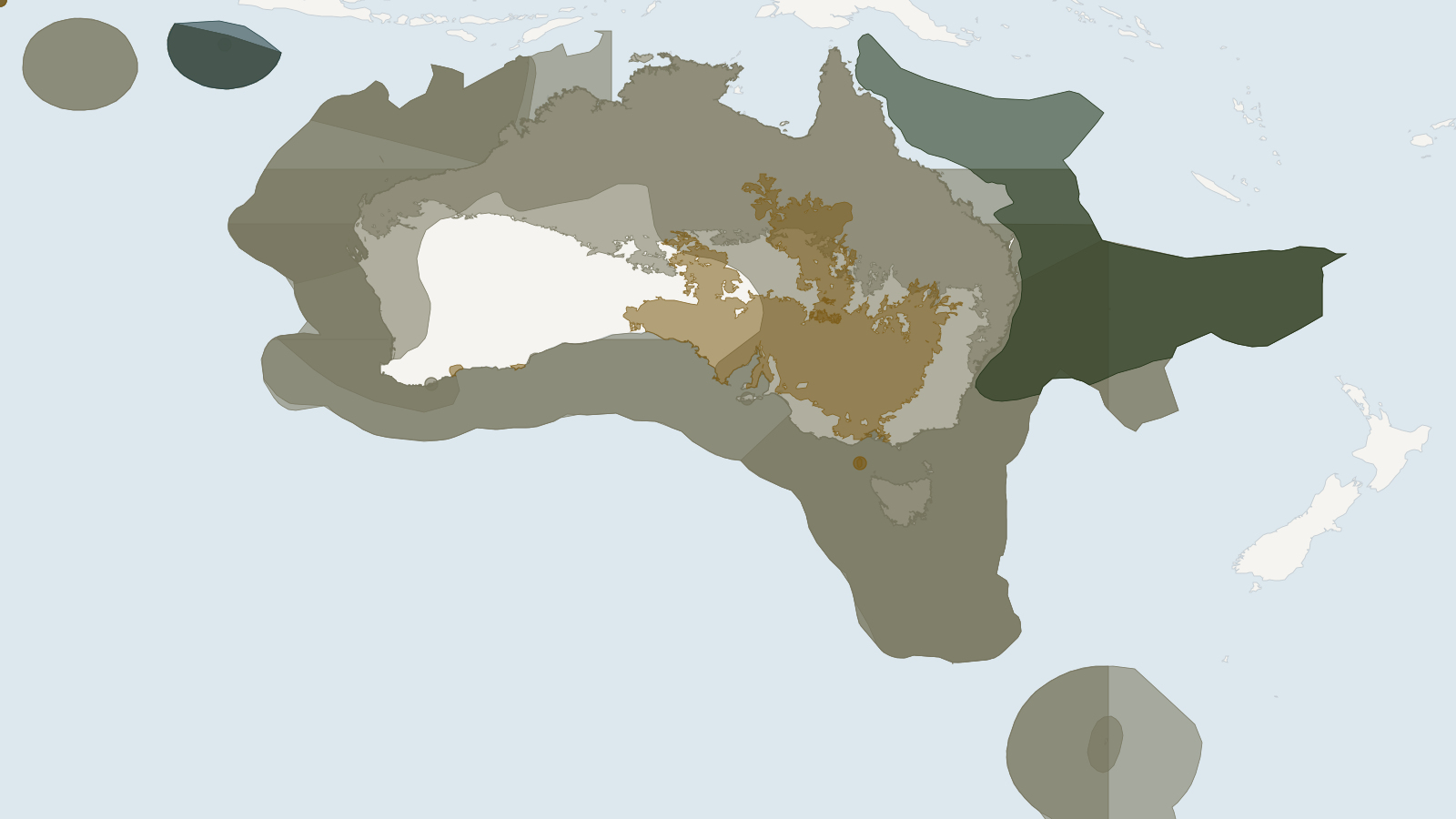
This month DCCEEW assessed every native bird and mammal against H5 bird flu. Twenty seven of Australia's already-endangered birds now sit at “very high” or “extreme” risk. Sea birds in particular are significantly at risk.
The stats are frightening. The same isolation that has kept H5 off our shores until now also means our native birds and mammals have had little prior exposure, and little natural resistance, leaving them acutely vulnerable to this strain.
Although we can't directly control how susceptible our wildlife is to these events, we can do our part in keeping populations healthy and resilient through purposeful conservation and regeneration, giving these species the best possible chance to ride out the wave.
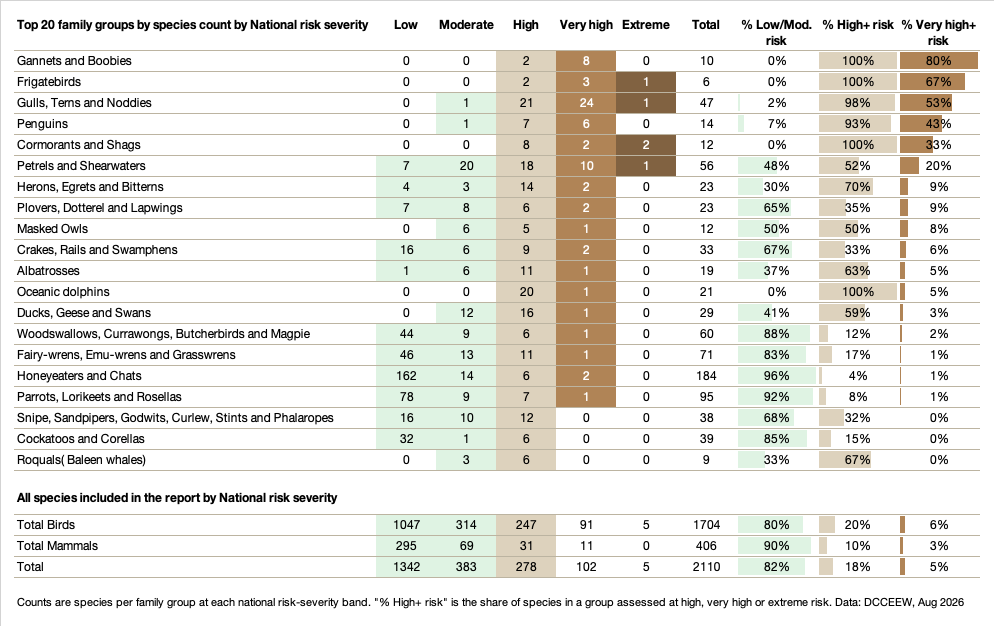
A chart shows some statistics but a map shows a much more complete picture, that's why we created this; a map showing what it could sound like to lose our voices of nature.
I hope that this will be the needed wakeup call to fight for our native biodiversity for future generations.
The full interactive map — every species' range shaded by conservation status × national risk. Pick a bird to see it, hear its call and zoom to its range.
Open the interactive map →Ranges: DCCEEW Species of National Environmental Significance (SNES) distributions. Risk ratings: DCCEEW national H5 risk assessment, August 2026.